
Disclosure: Some of the links in this article are affiliate links. If you book through them, we may earn a small commission — at no extra cost to you. We only recommend places we genuinely love.
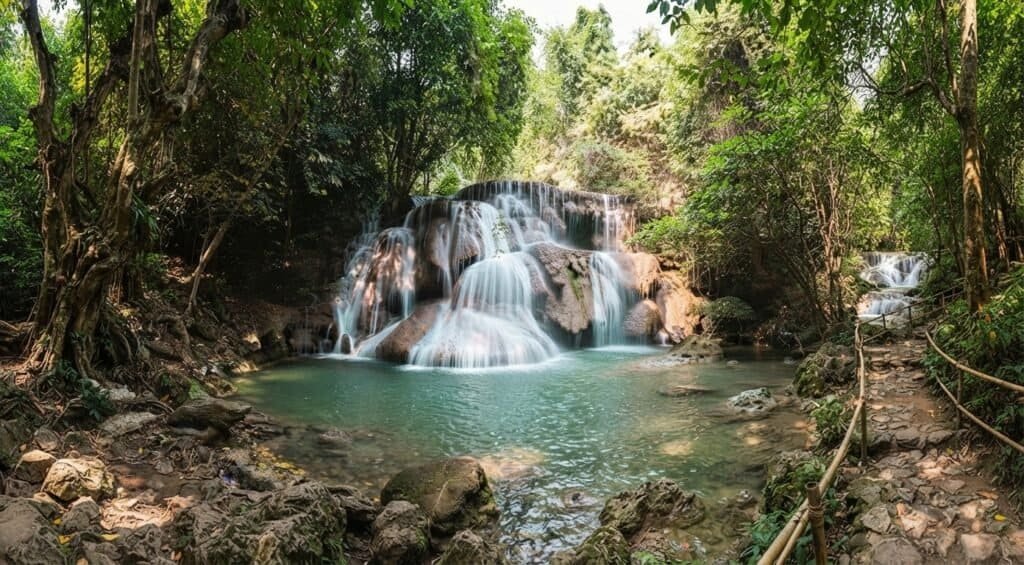
When I was living in Chiang Mai, Erawan was one of those places friends visiting from abroad always asked about — and one of the few day trips I’d actually recommend without hesitation. Seven tiers of turquoise pools carved into the jungle, and yes, the little fish really do nibble your feet at the lower levels.
Why Erawan National Park Is Worth the Trip
Erawan Falls is Thailand’s most famous waterfall system, and honestly, it earns the hype — most of the time. The seven-tiered falls cut through limestone forest in Kanchanaburi Province, roughly three and a half hours from Bangkok. Each tier has its own pool, its own character, and its own crowd level (the lower tiers get busy, the upper ones thin out fast once people realize the hike is real work).
Local tip: Don’t judge the whole park by tier 1 or 2. Most day-trippers stop there because it’s an easy walk from the entrance. The best pools — genuinely swim-worthy, genuinely quiet — are tiers 5 through 7. It’s a proper hike to get there, with some scrambling over rocks, but it’s the difference between a tourist photo and an actual experience.
Entrance Fees & Opening Hours (2026)
📋 Know Before You Go:
Entrance: 300 THB for foreign adults, 150 THB for children (3-14 years)
Vehicle fees: 30 THB for a car, 20 THB for a motorbike
Hours: 8:00 AM – 4:30 PM daily, but rangers start clearing the upper tiers from around 3:00 PM
Cash only — there’s no card payment for foreigners at the gate, so bring baht.
Best Time to Visit
Here’s the honest trade-off, because every guide glosses over this: rainy season (June to October) is when the falls look their most spectacular — full, powerful, genuinely photogenic. It’s also when the rocks get slippery and trails to the upper tiers can close after heavy rain, sometimes with zero notice. I’ve seen it happen — a group arrives, hikes up, and gets turned back at tier 4 because of a landslide risk.
Dry season (November to February) trades some of that drama for reliability — clearer water, safer trails, cooler temperatures for the hike. It’s also when everyone else has the same idea, so weekends get packed. If you can go on a weekday, any season, you’ll have a noticeably better time.
Getting There
Most travelers do this as a day trip from either Bangkok or Kanchanaburi town. From my experience, basing yourself in Kanchanaburi for a night makes the whole thing far less rushed — you’re not fighting a 6-hour round-trip van ride on top of the park visit itself.
From Kanchanaburi: Local buses run roughly hourly from the Kanchanaburi bus terminal directly to the park entrance, about 90 minutes each way. It’s cheap, but check the return schedule before you hike up — the last bus back leaves in the late afternoon, and getting stranded at a national park gate as the light fades is not how you want to end the day.
From Bangkok: A private car or organized tour is the practical choice — it’s about 3.5 hours each way, and self-driving through unfamiliar rural roads with a park deadline isn’t worth the stress.
🚐 Skip the Bus Schedule Headache:
If you’re basing yourself in Kanchanaburi, book your transport in advance — seats fill up fast in high season and the last thing you want is to miss the return bus from the park gate.
Hike the Falls: What to Expect at Each Tier
The seven tiers get progressively harder and progressively less crowded — which is exactly the trade you want to make:
Tiers 1-2: Easy, flat, packed with families and tour groups. Nice for a quick dip, not worth lingering.
Tiers 3-4: A bit more climbing, noticeably fewer people. This is where the water starts looking genuinely turquoise rather than just green.
Tiers 5-7: Real hiking — rocks, roots, some scrambling. This is where you’ll find the postcard pools with almost nobody in them. Budget at least 2-3 hours round trip if you’re going all the way to tier 7, and wear shoes with actual grip, not flip-flops.
No food or drink is allowed past tier 2 (anti-littering rule), though you can bring a water bottle if you pay a small refundable deposit at the checkpoint.
🏞️ Want a Guide Instead of Guessing the Trail?
A guided day trip takes the logistics off your plate entirely — transport, entrance fees often included, and someone who knows exactly when the upper tiers are worth the climb.
Where to Stay
Skip the day-trip rush and base yourself in Kanchanaburi town for a night — it turns Erawan from a stressful checklist item into an actual relaxing day. There are also small guesthouses right near the park entrance if you want to be first through the gate before the tour buses arrive.
🏨 Book Ahead for Early Park Access:
Staying near the entrance means you can be on the trail before 8 AM, well ahead of the day-trip crowds from Bangkok.
Before You Go
Kanchanaburi is rural — cash is essential, cell coverage can be patchy once you’re deep in the park, and it’s worth having a working eSIM sorted before you leave Bangkok so you’re not scrambling for signal to check bus times.
📱 Stay Connected in Rural Kanchanaburi:
Get your eSIM set up before you leave for the park — signal gets spotty near the falls, and you’ll want it working for the return trip.
For visas, transport passes, and more logistics tips, check our full Thailand Travel Logistics Guide.
Erawan pairs naturally with the rest of Kanchanaburi Province — the Bridge on the River Kwai, the Death Railway, and the war museums are all close by. See our full Kanchanaburi Travel Guide for the complete picture.
Ready to Plan Your Erawan Day Trip?