
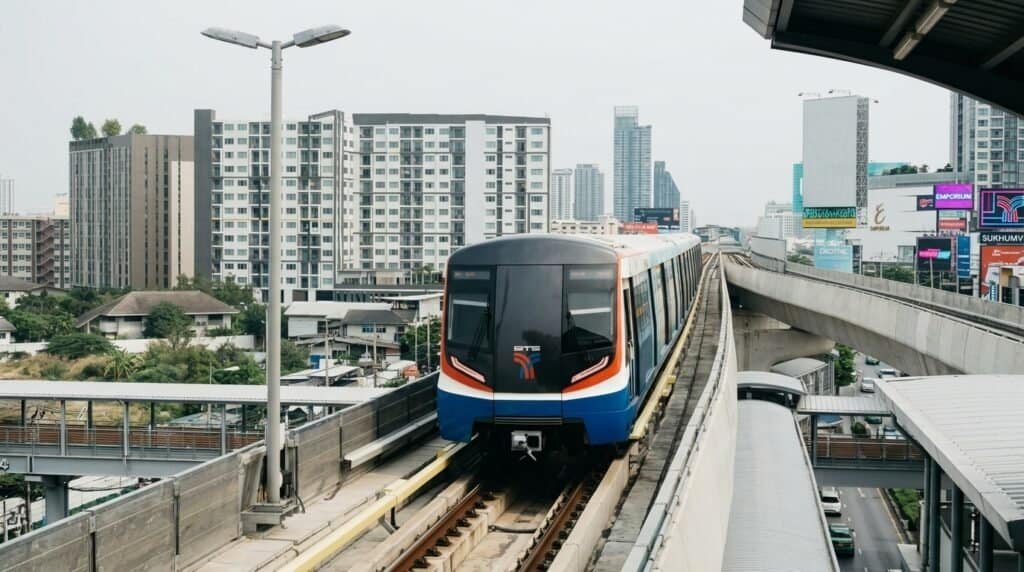
Bangkok’s traffic is famous for a reason. A ten-minute trip on the map can turn into an hour in a taxi, while the same distance on the Skytrain takes minutes. The trick to getting around Bangkok isn’t finding one perfect option. It’s knowing which one to use for which trip.
The Short Version
- Use the BTS or MRT for anything along their lines, especially at rush hour.
- Use Grab for door-to-door trips, late nights, and anywhere the trains don’t reach.
- Use the river boat for the Old City sights, because it’s both transport and sightseeing.
- Use tuk-tuks for the experience, not for getting anywhere efficiently.
BTS Skytrain and MRT: Your Best Friends
The BTS (elevated) and MRT (underground) cover most of the areas visitors care about: Sukhumvit, Silom, Siam, and the major shopping and business districts. They’re air-conditioned, predictable, and unaffected by traffic, which makes them the default choice for any trip that fits their routes.
A few practical tips:
- Keep small change handy. Single-journey ticket machines usually take coins or small notes, and big bills can leave you stuck in a queue.
- The BTS and MRT are separate systems. Switching between them usually means walking between stations and buying a separate ticket, so check the station map before planning a connection.
- Avoid the evening rush if you can. Trains get crowded, and with luggage it’s miserable.
- Look for the exit number. Big stations have many exits, and choosing the right one can save a long, hot walk.
Grab: The Easy Button
For trips the trains don’t cover, I use Grab. You see the price upfront, you don’t have to argue about the meter, and the app shows your pickup point, which avoids a lot of confusion with drivers. It’s especially useful late at night and in the rain, when street taxis become hard to find.
Two things worth knowing: pickup points can be tricky in malls and big hotels, so check the pin in the app, and during heavy rain, prices can rise and wait times can stretch. If you’re in a rush, the train often beats it.
📶 Grab needs data from the moment you land: Booking a ride at the airport, finding your hotel, and checking the train map all depend on a working connection. A local eSIM means no queue at the SIM counter and no hunting for Wi-Fi.
Metered Taxis
Taxis are everywhere and usually cheap, but the meter is the whole game. Ask the driver to use it before you get in, and if they refuse or quote a flat price near a tourist spot, simply walk away and take the next one. At the airport, use the official taxi queue and expect a surcharge on top of the meter. If you’d rather skip the negotiation altogether, Grab is the simpler option.
Tuk-Tuks: Fun, Not Efficient
A tuk-tuk ride is worth doing once, but treat it as an experience, not as transport. The price is whatever you agree on before you start, and it’s usually higher than a Grab for the same trip.
The classic scam to know: someone near a major temple or the Grand Palace tells you it’s closed today and offers to take you somewhere else instead. It’s almost always a detour to a shop where the driver earns a commission. Check opening hours yourself, and ignore friendly strangers who tell you otherwise.
River Boats
The Chao Phraya River is one of the nicest ways to see the Old City, and the commuter boats are cheap. They stop at piers close to the major temples and the Grand Palace area, and they avoid the road traffic entirely. Check the current pier map and boat routes before you go, since services and colored-flag lines can change.
Walking and Motorbike Taxis
Walking is fine for short distances, but Bangkok’s heat, humidity, and uneven pavements make long walks tiring. Many stations connect to malls through covered sky bridges, which is a good way to stay out of the sun.
Motorbike taxis (the riders in orange vests) are handy for short hops down long side streets, but I wouldn’t use them with luggage, and always ask for a helmet.
Where You Stay Decides How You Move
The single best thing you can do for getting around Bangkok is to book a hotel within a short walk of a BTS or MRT station. It saves time, money, and a lot of sitting in traffic. My Best Bangkok Hotels guide covers areas that work well for first-time visitors.
🚆 Filter by what’s near the station: Hotel listings on Agoda show the distance to the nearest BTS or MRT, which is exactly the detail that decides how much time you’ll spend in traffic.
Leaving Bangkok
When it’s time to head out of the city, the trains, buses, and ferries to places like Ayutthaya, Kanchanaburi, and Chiang Mai are easy to book online, and it’s worth doing so ahead of time during holidays. My Thailand Train Travel Guide goes deeper on rail, and if you’re deciding between cities, see Chiang Mai vs Bangkok.
Book trains, buses, and ferries on 12Go
Before You Go
For visas, money, and everything else to sort before you land, see my Thailand Travel Logistics Guide.
My Honest Take
Bangkok rewards a mix. Take the train when it goes where you’re going, Grab when it doesn’t, and a boat when you want the view. Skip the stress of haggling and flag-down taxis, and you’ll spend your time on the city instead of the traffic.
Ready to Plan Your Bangkok Trip?